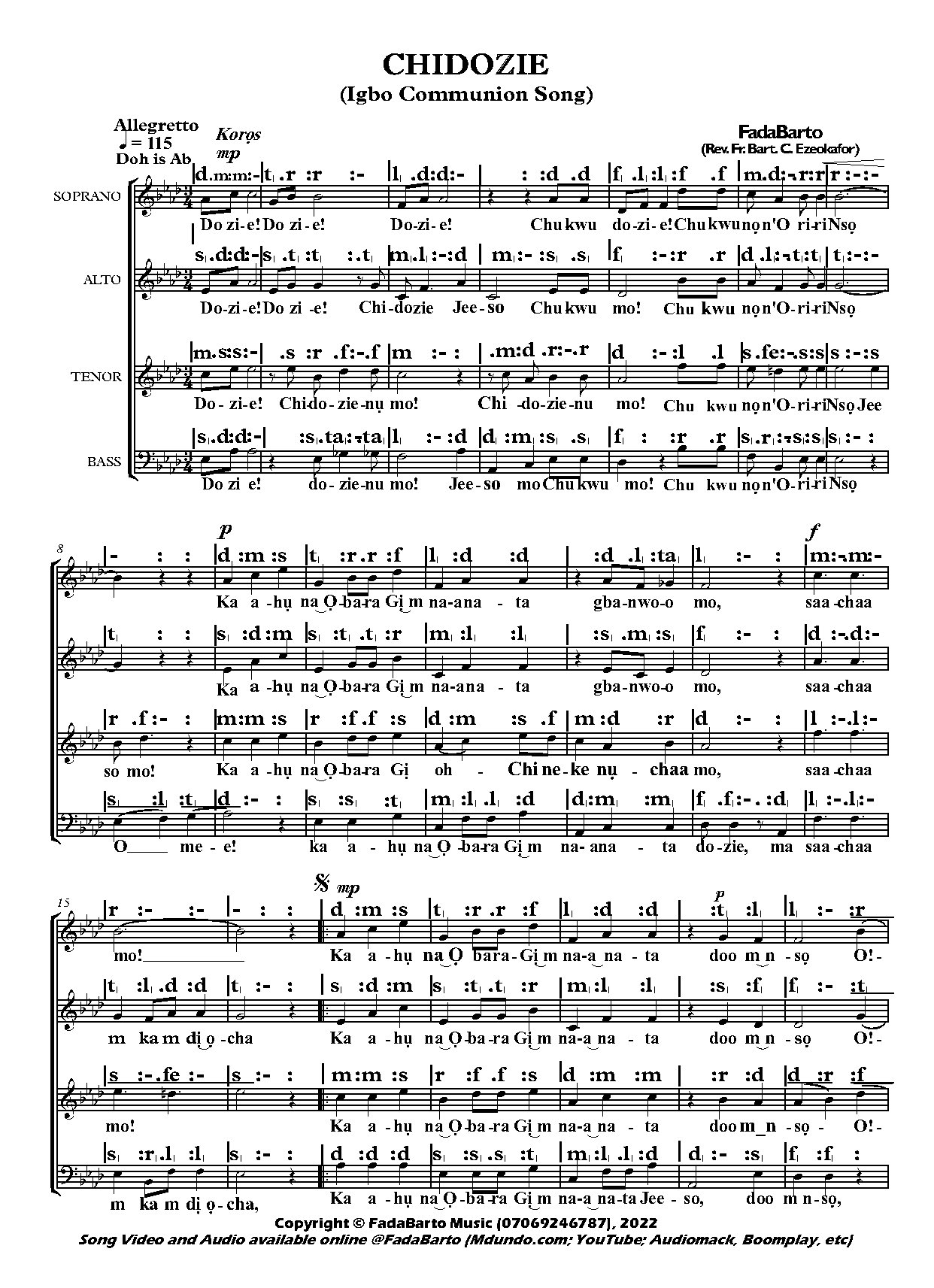
CHIDOZIE - Choir Script PDF Thumbnail
Preview
3 0
101 downloads
Added Aug 16, 2026
Uploaded By: Choir PDFs
Format: Staff & Solfa
Language: Igbo
Pages: 6 pages
CHIDOZIE by FadaBarto (Rev. Fr. Bart. C. Ezeokafor) — Lyrics

INTRO Dozie! Dozie! Dozie! Chukwu dozie! Chukwu nọ n'Orinnsọ Ka ahụ na Ọbara Gị m naanata gbanwoo mo, saachaa so mo! Ka ahụ na Ọbara Gị oh Chineke nụchaa mo, saachaa mo! Ka ahụ na Ọbara Gị m naanata doo m nsọ O! m ka m dị ọcha Ka ahụ na Ọbara Gị m naanata doo m nsọ O! m ka m dị ọcha, Onye ndozi! VERSE 1 Ike a gwụgo mo! Ike a gwụgo mo! Ike a gwụgo mo! imejọzi Gị Jeeso mo! Weerenu amara Gị jidesienụ m ike, Dozie ndụ m, ka m bụrụ nke Gị o! VERSE 2 Oteela m chọbara ka mụ na Gị dozie, ma ụtọ njọ ekweghị m ka m kwụdosie ike, nyerenu m'aka ka m mebe uche Gị, belatara m oliwarawara, oliwarawara nke njọ! VERSE 3
Read full lyrics

About CHIDOZIE

"Chidozie" is a deeply moving Igbo Communion song that centers on spiritual restoration and healing. The title itself is a plea for God to mend what is broken. As the choir sings the opening lines, the lyrics ask that the Body and Blood of Christ received in the Eucharist will wash the communicant clean and bring total transformation. It carries a gentle, reflective rhythm that fits perfectly into the quiet moments after Communion, allowing the congregation to internalize the mystery they have just received.

The verses read like a personal confession and a prayer for strength. The singer admits to spiritual fatigue—"Ike a gwụgo mo!" (My strength is gone)—and acknowledges how the fleeting sweetness of sin has made it hard to stand firm. In the face of life's destructive waves, the song begs God to hold them tightly so they do not fall. It is a very human, relatable moment in the liturgy, giving voice to the everyday struggles of the faithful while placing absolute trust in God's grace.

The extended ad-lib section in the refrain elevates the piece into a litany of biblical testimonies. The cantor calls to mind those whose lives Jesus radically changed: Mary Magdalene, the woman with the issue of blood, Zacchaeus, Saul, and the Samaritan woman. By weaving these scriptural encounters into the final moments of the song, the choir reminds everyone in the pews that the same Christ they have just received in Communion is still in the business of changing lives and rewriting stories today.