This edition was prepared by Simon Frisch — free to download, print, rehearse and perform.
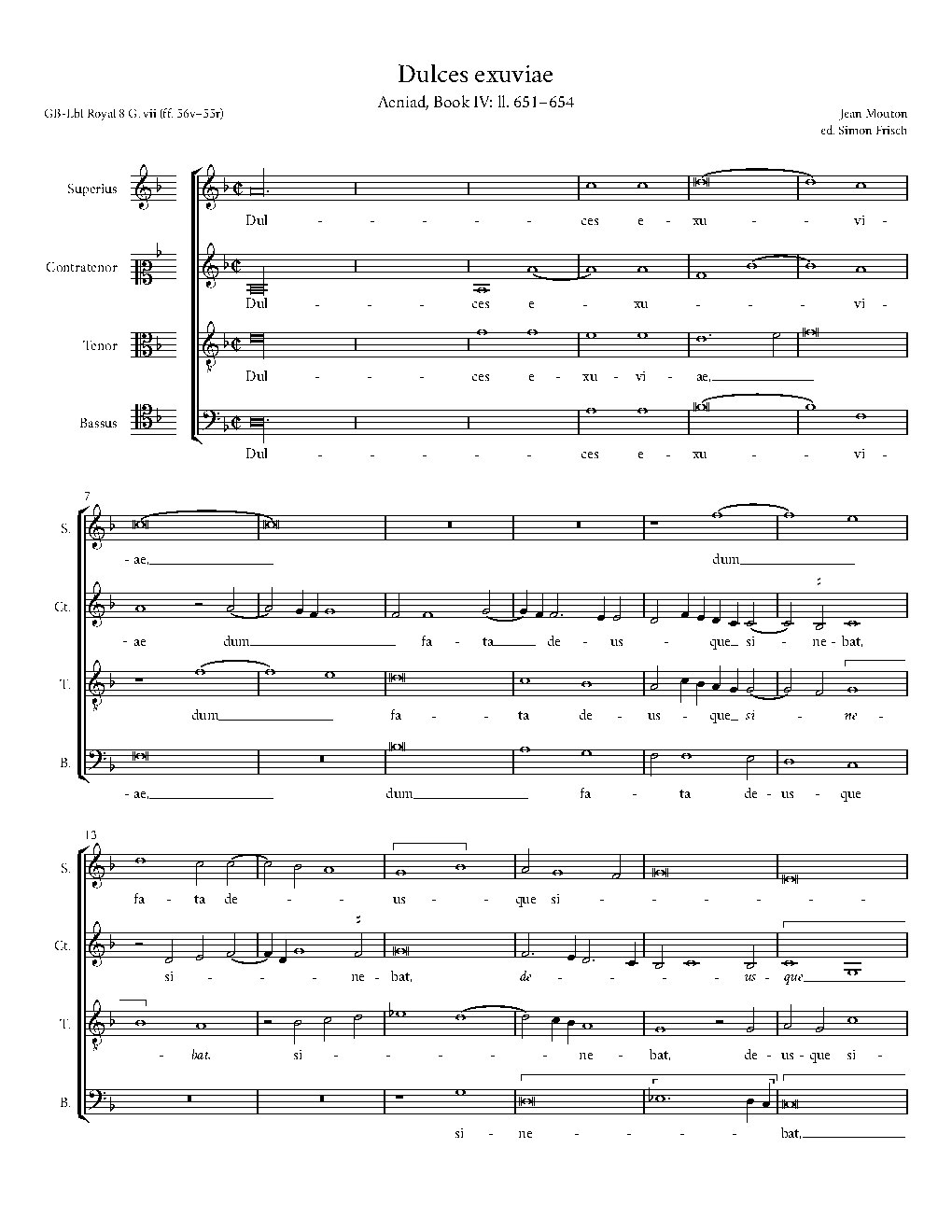
Dulces exuviae
Staff Notation • Secular, Madrigals
Preview
0
0
2 editions of this piece
Different typesettings and voicings of the same work. This page shows the main edition; the others are below.
SAAB|SAABar · John Kelly
Preview
Subscribed as
Want Sunday picks sent to another address too?
Free weekly email
Your choir should not be left out in what's trending
Sunday mass selections, psalms, and trending songs in your area — straight to your inbox.
About Dulces exuviae
The text, 'Dulces exuviae', taken from Virgil's Aeneid, expresses the dying Dido's lament. In this setting for SAAB|SAABar, Jean Mouton paints a poignant musical scene of farewell, echoing the sorrow and resignation of the Carthaginian queen. This secular Renaissance part-music, often called a madrigal, is characterised by its expressive harmonies and careful attention to the emotional content of the text. The interplay between the four vocal parts creates a rich texture, perfectly suited to conveying the pathos of Dido's final words. It is a compelling example of how composers of the period used intricate vocal writing to explore human emotion and dramatic narrative.