DER HÖLLE RACHE KOCHT IN MEINEM
Staff & Solfa Notation • Classicals, Concert, Non-Liturgical / Special Choir Arrangements
Subscribed as
Want Sunday picks sent to another address too?
Your choir should not be left out in what's trending
Sunday mass selections, psalms, and trending songs in your area — straight to your inbox.
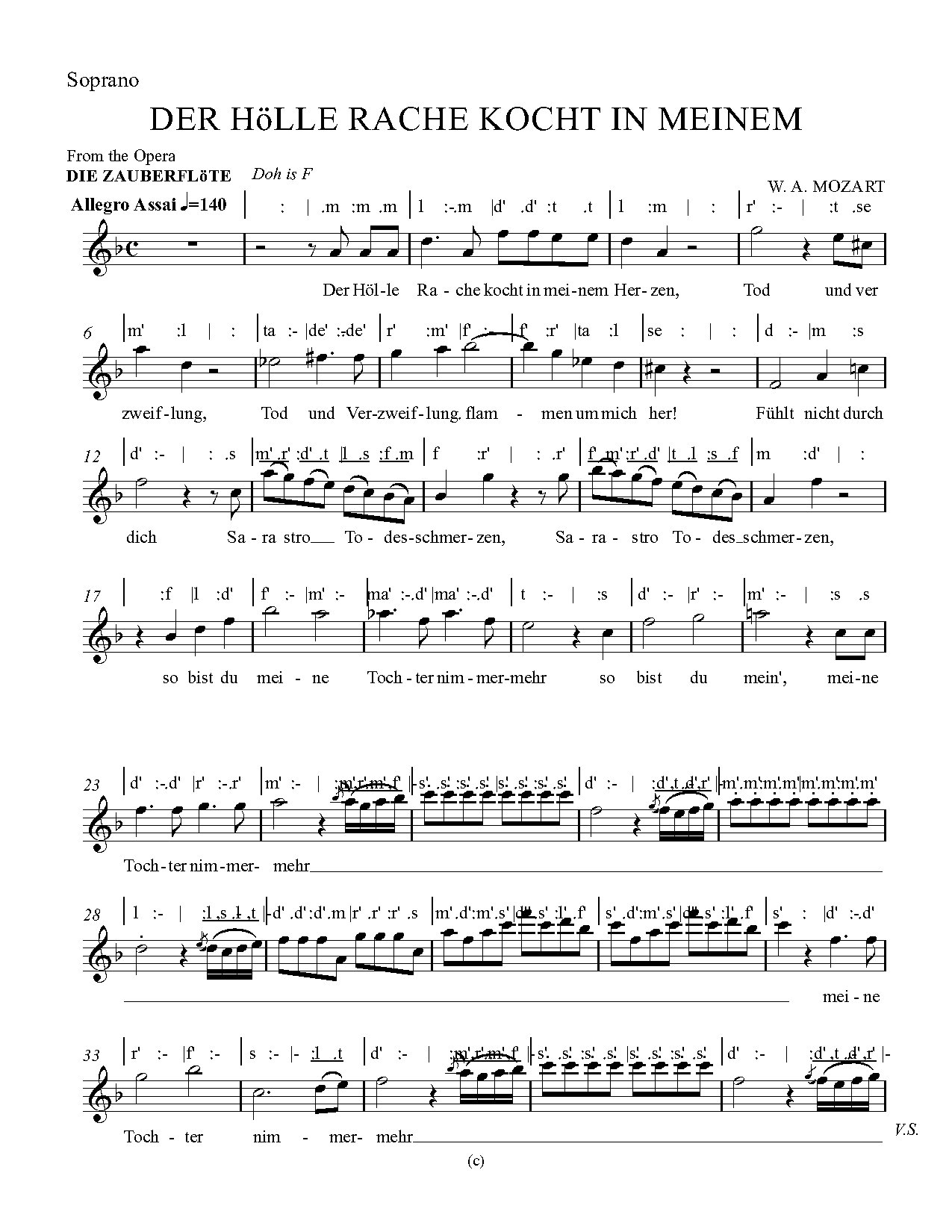
DER HÖLLE RACHE KOCHT IN MEINEM by Wolfgang Amadeus Mozart — Lyrics
About DER HÖLLE RACHE KOCHT IN MEINEM
When a soprano steps up to sing "Der Hölle Rache kocht in meinem Herzen," the atmosphere in the hall shifts immediately. Known universally as the Queen of the Night aria from W. A. Mozart's opera Die Zauberflöte (The Magic Flute), this piece is a thrilling mountain to climb for any classically trained singer. In the Nigerian choral and classical music scene, tackling a piece of this magnitude is a mark of serious vocal discipline. We often hear it programmed not for Sunday Mass, but for grand concerts, choir competitions, and special recitals where soloists can truly stretch their wings.
The German text is pure, unadulterated drama. The Queen is commanding her daughter to strike down her rival, Sarastro, singing that the vengeance of hell boils in her heart ("Tod und Verzweiflung flammen um mich her!"). Mozart captures this fury through explosive leaps, rapid-fire staccato notes, and those famously stratospheric high Fs that demand absolute precision. Even if the audience does not speak German, the sheer intensity of the music communicates every ounce of the character's wrath and desperation.
For a choir director or vocal coach, working on this score is about balancing that fiery emotion with strict technical control. The solfa notation provided alongside the staff in this edition makes it more accessible for singers who are learning to navigate its complex intervals. It is a brilliant, demanding concert piece that leaves listeners breathless and reminds us of the incredible capabilities of the human voice.