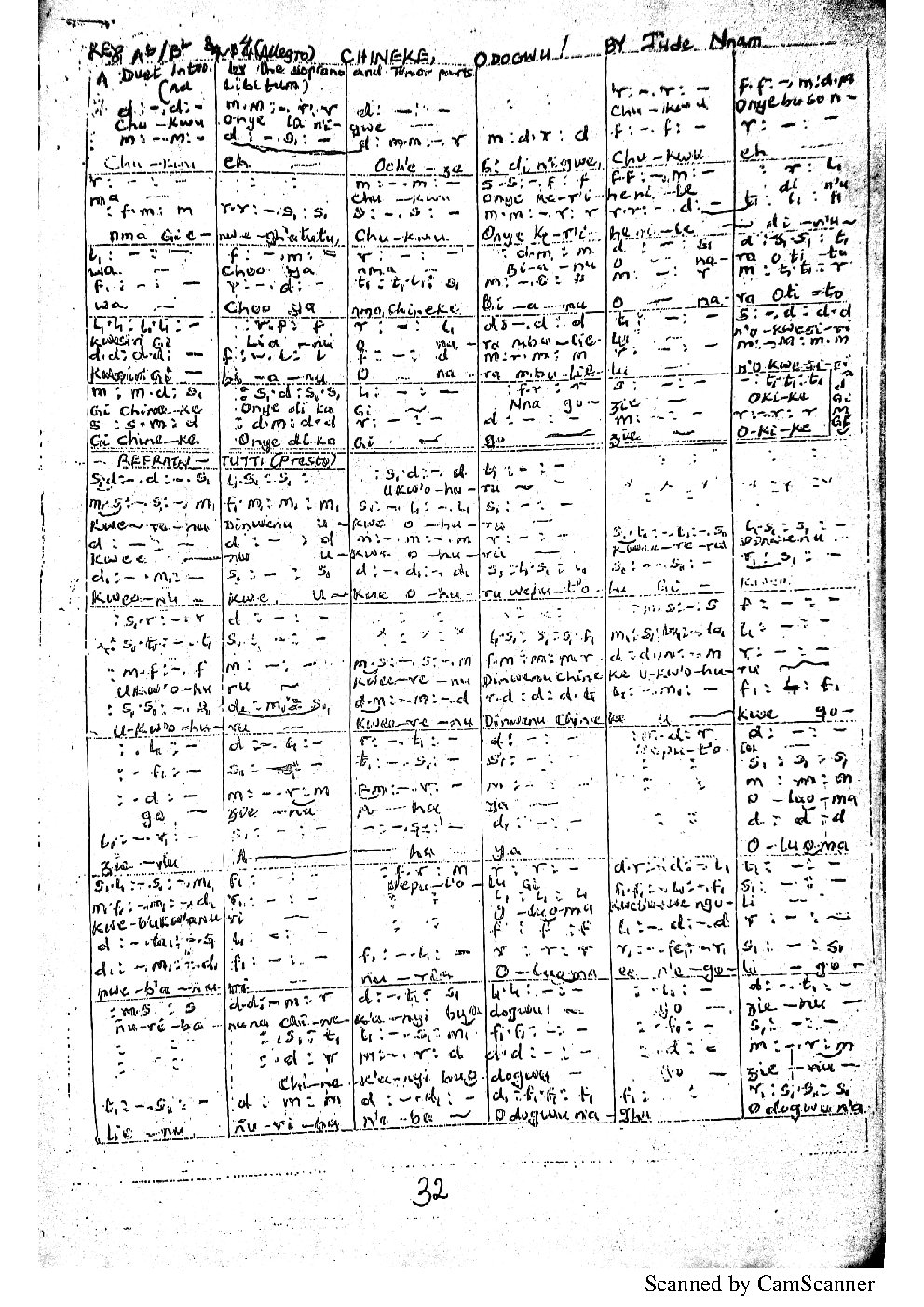
YEGHEYEGHE NA EKWORO NWUNYE DI (NGUBIRI)
Solfa Notation • Folk songs, Non-Liturgical / Special Choir Arrangements, Concert

Subscribed as
Want Sunday picks sent to another address too?
Your choir should not be left out in what's trending
Sunday mass selections, psalms, and trending songs in your area — straight to your inbox.
YEGHEYEGHE NA EKWORO NWUNYE DI (NGUBIRI) — Lyrics
About YEGHEYEGHE NA EKWORO NWUNYE DI (NGUBIRI)
"Yegheyeghe Na Ekworo Nwunye Di" is a vibrant choral arrangement of a traditional Igbo folk tale. The title points directly to a story of a jealous co-wife ("ekworo nwunye di"), a common theme in Nigerian folklore used to teach moral lessons about envy and family life. The piece opens with the playful, rhythmic "Yegheyeghe" chant, asking what ripe fruits—like the utu and udala—are hanging in the trees, dripping with sweet juice.
As the song unfolds, the choir shifts into the narrative of the wicked co-wife. The lyrics describe a mother who simply goes to fetch water for her child, only to be chased and demanded payment by her jealous counterpart. The drama builds as the voices recount how the water miraculously dries up and ascends to the sky, leaving the envious woman empty-handed. It is a story of hardship, malice, and ultimate justice, delivered through layered harmonies and urgent rhythms.
Choirs typically bring this kind of piece to life during cultural presentations, concerts, or special social gatherings rather than during the liturgy. It allows the singers to step into the roles of storytellers, using dynamic contrasts and expressive vocal lines to capture the bitterness of the rivalry and the innocence of the mother pleading for her child. The engaging call-and-response and the familiar folk motifs make it a captivating experience for any audience.