This edition was prepared by Pothárn Imre — free to download, print, rehearse and perform.
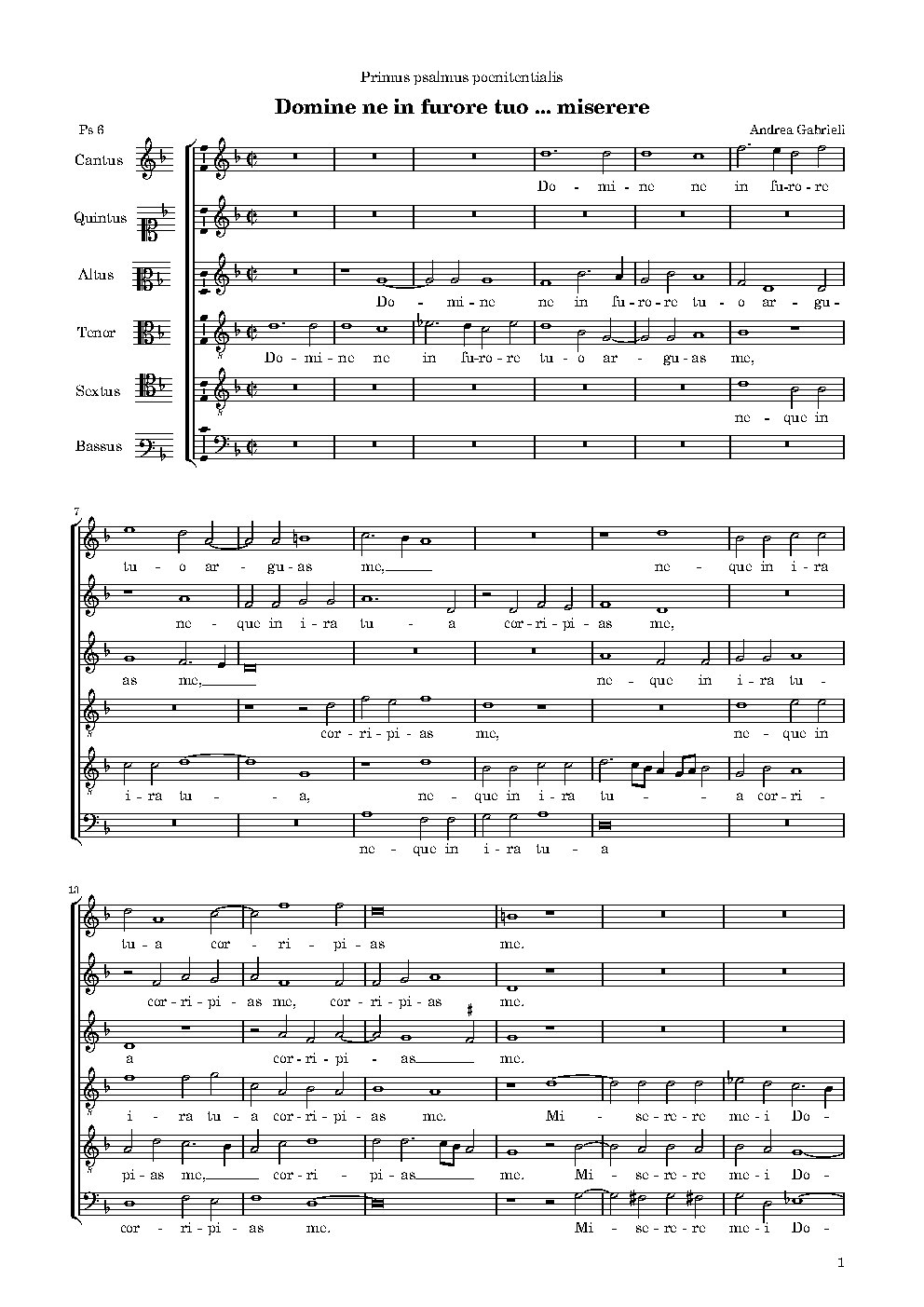
Domine, ne in furore tuo arguas me; 2nda pars Quoniam non est in morte; 3a pars Discedite a me
Staff Notation • Sacred, Motets
Preview
0
0
3 editions of this piece
Different typesettings and voicings of the same work. This page shows the main edition; the others are below.
Subscribed as
Want Sunday picks sent to another address too?
Free weekly email
Your choir should not be left out in what's trending
Sunday mass selections, psalms, and trending songs in your area — straight to your inbox.
Domine, ne in furore tuo arguas me; 2nda pars Quoniam non est in morte; 3a pars Discedite a me by Andrea Gabrieli — Lyrics
In finem, in carminibus. Psalmus David. Pro octava.
Domine, ne in furore tuo arguas me, neque in ira tua corripias me.
Miserere mei, Domine, quoniam infirmus sum; sana me, Domine,
quoniam conturbata sunt ossa mea.
Et anima mea turbata est valde; sed tu, Domine, usquequo?
Convertere, Domine, et eripe animam meam; salvum me fac propter misericordiam tuam.
Quoniam non est in morte qui memor sit tui; in inferno autem quis confitebitur tibi?
Read full lyrics
About Domine, ne in furore tuo arguas me; 2nda pars Quoniam non est in morte; 3a pars Discedite a me
This three-part motet by Andrea Gabrieli sets verses from Psalm 6, a prayer for mercy in times of distress. The first part, Domine, ne in furore tuo arguas me, is a plea for God not to rebuke the singer in His anger, followed by a desperate cry for healing from physical and spiritual sickness. The second part, Quoniam non est in morte, reflects on the silence of death and the inability to praise God, contrasting it with the possibility of confession. The final section, Discedite a me, invokes a powerful call for the wicked to depart, as God has heard the singer's weeping. Scored for a large choir of SSATTB and SMsATBarB, this work offers rich harmonic possibilities and dramatic contrasts for experienced ensembles.