This edition was prepared by Jean-Paul Feo — free to download, print, rehearse and perform.
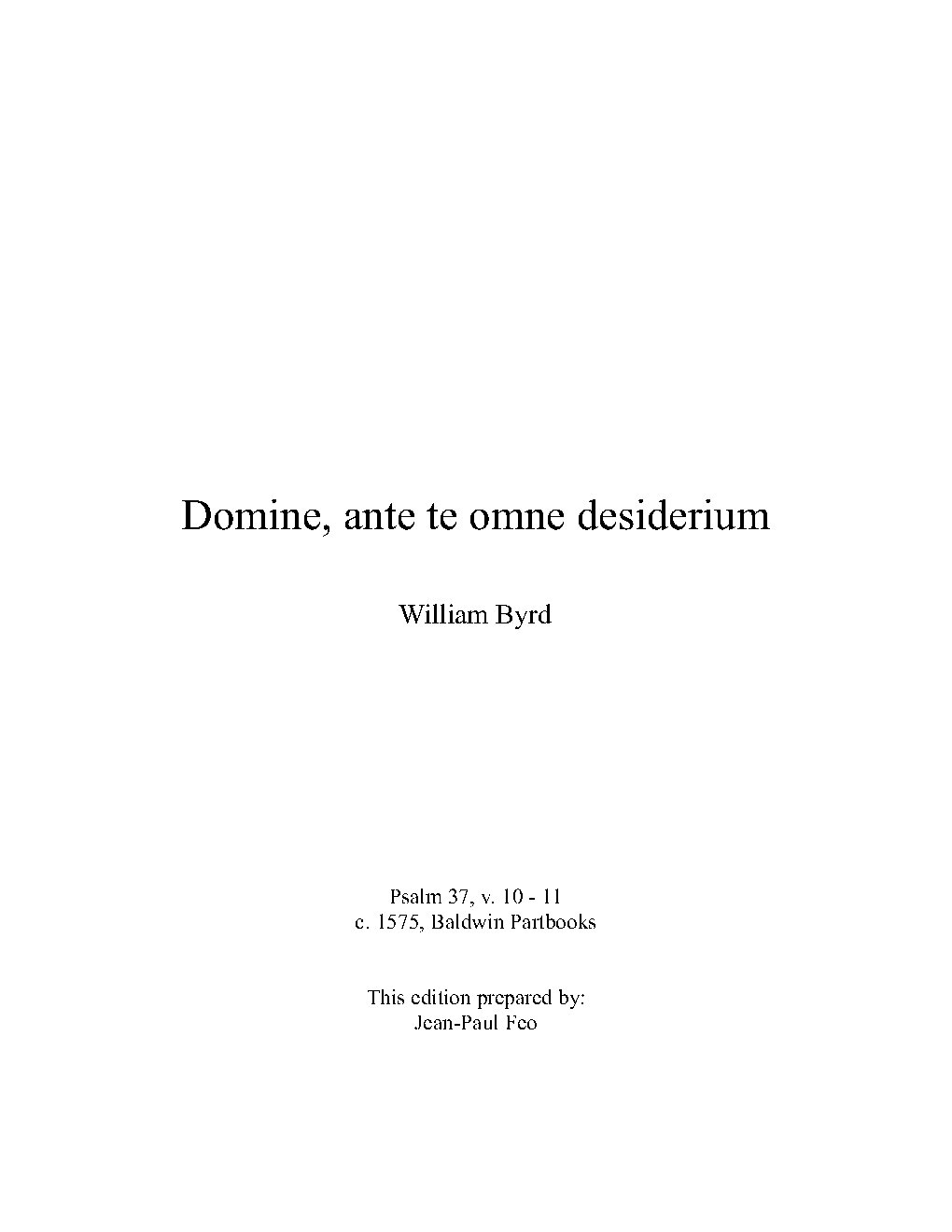
Domine ante te
Staff Notation • Sacred, Motets
Preview
0
0
3 editions of this piece
Different typesettings and voicings of the same work. This page shows the main edition; the others are below.
Subscribed as
Want Sunday picks sent to another address too?
Free weekly email
Your choir should not be left out in what's trending
Sunday mass selections, psalms, and trending songs in your area — straight to your inbox.
Domine ante te by William Byrd — Lyrics
Psalmus David, in rememorationem de sabbato.
Domine, ne in furore tuo arguas me, neque in ira tua corripias me:
quoniam sagittae tuae infixae sunt mihi, et confirmasti super me manum tuam.
Non est sanitas in carne mea, a facie irae tuae; non est pax ossibus meis,
a facie peccatorum meorum:
quoniam iniquitates meae supergressae sunt caput meum,
et sicut onus grave gravatae sunt super me.
Putruerunt et corruptae sunt cicatrices meae, a facie insipientiae meae.
Miser factus sum et curvatus sum usque in finem; tota die contristatus ingrediebar.
Quoniam lumbi mei impleti sunt illusionibus, et non est sanitas in carne mea.
Afflictus sum, et humiliatus sum nimis; rugiebam a gemitu cordis mei.
Domine, ante te omne desiderium meum, et gemitus meus a te non est absconditus.
Cor meum conturbatum est; dereliquit me virtus mea,
et lumen oculorum meorum, et ipsum non est mecum.
Amici mei et proximi mei adversum me appropinquaverunt, et steterunt; et qui juxta me erant,
Read full lyrics
About Domine ante te
William Byrd’s motet Domine ante te is a profound setting of a penitential text from the Psalms, often associated with remembrance of the Sabbath. Composed for SSATTB voices, this Latin motet offers rich harmonic possibilities for an accomplished choir. The text expresses deep contrition and supplication, with the singer pleading for God’s mercy rather than divine judgment. Byrd’s masterful counterpoint and expressive text-painting vividly convey the weight of sin and the earnest desire for spiritual healing and peace. This sacred work is a powerful example of Renaissance polyphony, suitable for services or concerts where solemn devotion and musical artistry are desired.