This edition was prepared by Gerd Eichler — free to download, print, rehearse and perform.
Tröst uns, Gott, unser Zuversicht, SWV 177
Staff Notation • Sacred, Hymns
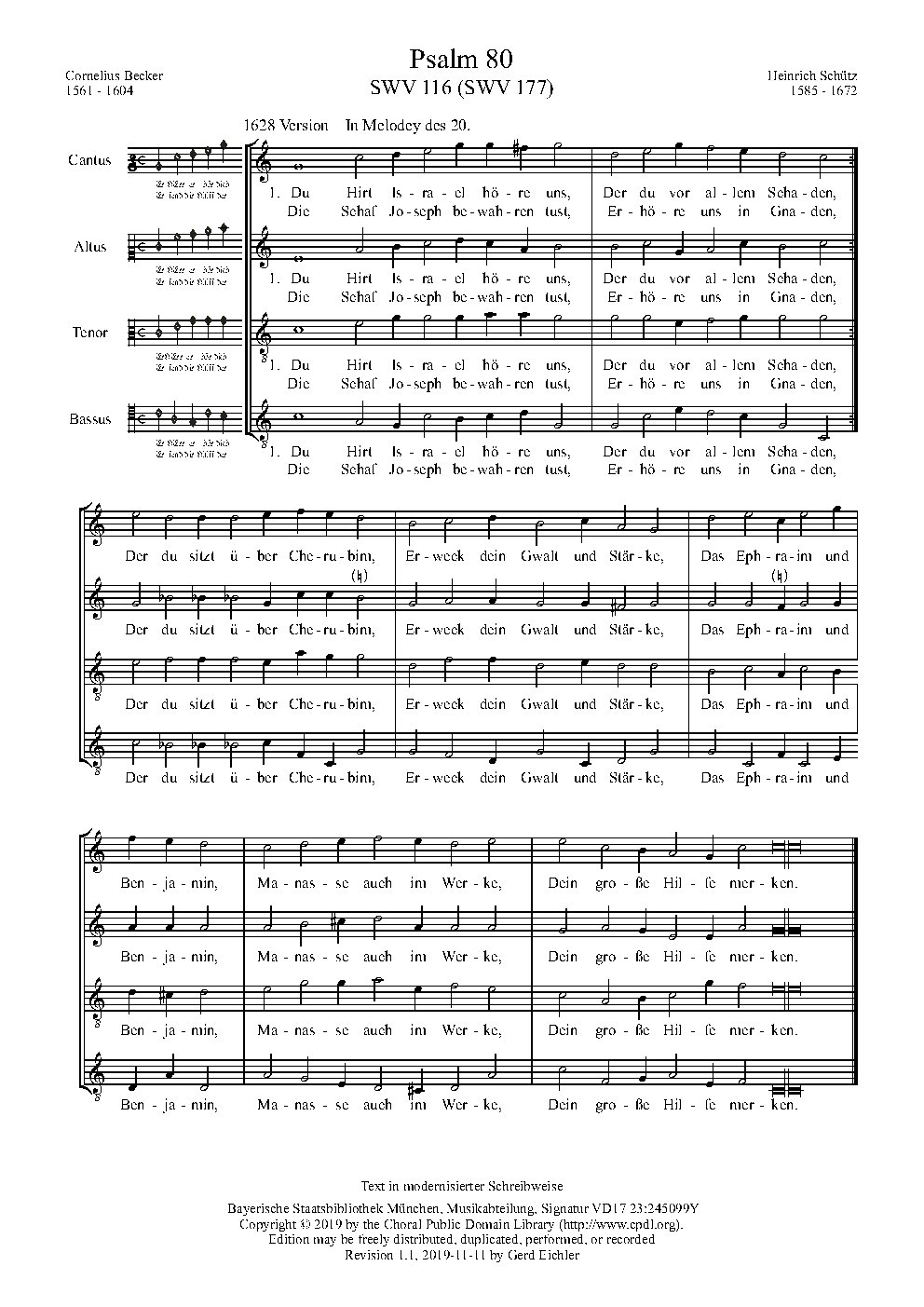
Preview
0
0
7 editions of this piece
Different typesettings and voicings of the same work. This page shows the main edition; the others are below.
Subscribed as
Want Sunday picks sent to another address too?
Free weekly email
Your choir should not be left out in what's trending
Sunday mass selections, psalms, and trending songs in your area — straight to your inbox.
Tröst uns, Gott, unser Zuversicht, SWV 177 by Heinrich Schütz — Lyrics
In finem, pro iis qui commutabuntur. Testimonium Asaph, psalmus.
Qui regis Israël, intende; qui deducis velut ovem Joseph.
Qui sedes super cherubim, manifestare
coram Ephraim, Benjamin, et Manasse. Excita potentiam tuam, et veni, ut salvos facias nos.
Deus, converte nos, et ostende faciem tuam, et salvi erimus.
Domine Deus virtutum, quousque irasceris super orationem servi tui?
cibabis nos pane lacrimarum, et potum dabis nobis in lacrimis in mensura?
Posuisti nos in contradictionem vicinis nostris, et inimici nostri subsannaverunt nos.
Deus virtutum, converte nos, et ostende faciem tuam, et salvi erimus.
Vineam de Aegypto transtulisti: ejecisti gentes, et plantasti eam.
Dux itineris fuisti in conspectu ejus; plantasti radices ejus, et implevit terram.
Operuit montes umbra ejus, et arbusta ejus cedros Dei.
Read full lyrics
About Tröst uns, Gott, unser Zuversicht, SWV 177
Heinrich Schütz, a towering figure of 17th-century German music, presents a profound setting of Psalm 80 in this work for SATB choir. The text, a prayer for divine intervention and restoration, opens with a plea for God to guide and protect his people, likening them to a flock. The choir's voices are called upon to express the deep anguish of a people facing hardship and ridicule from their neighbours, a poignant reflection of the psalm's themes of abandonment and the yearning for deliverance. The German title, Tröst uns, Gott, unser Zuversicht (Comfort us, God, our confidence), encapsulates the work's central appeal for solace and renewed faith amidst adversity.