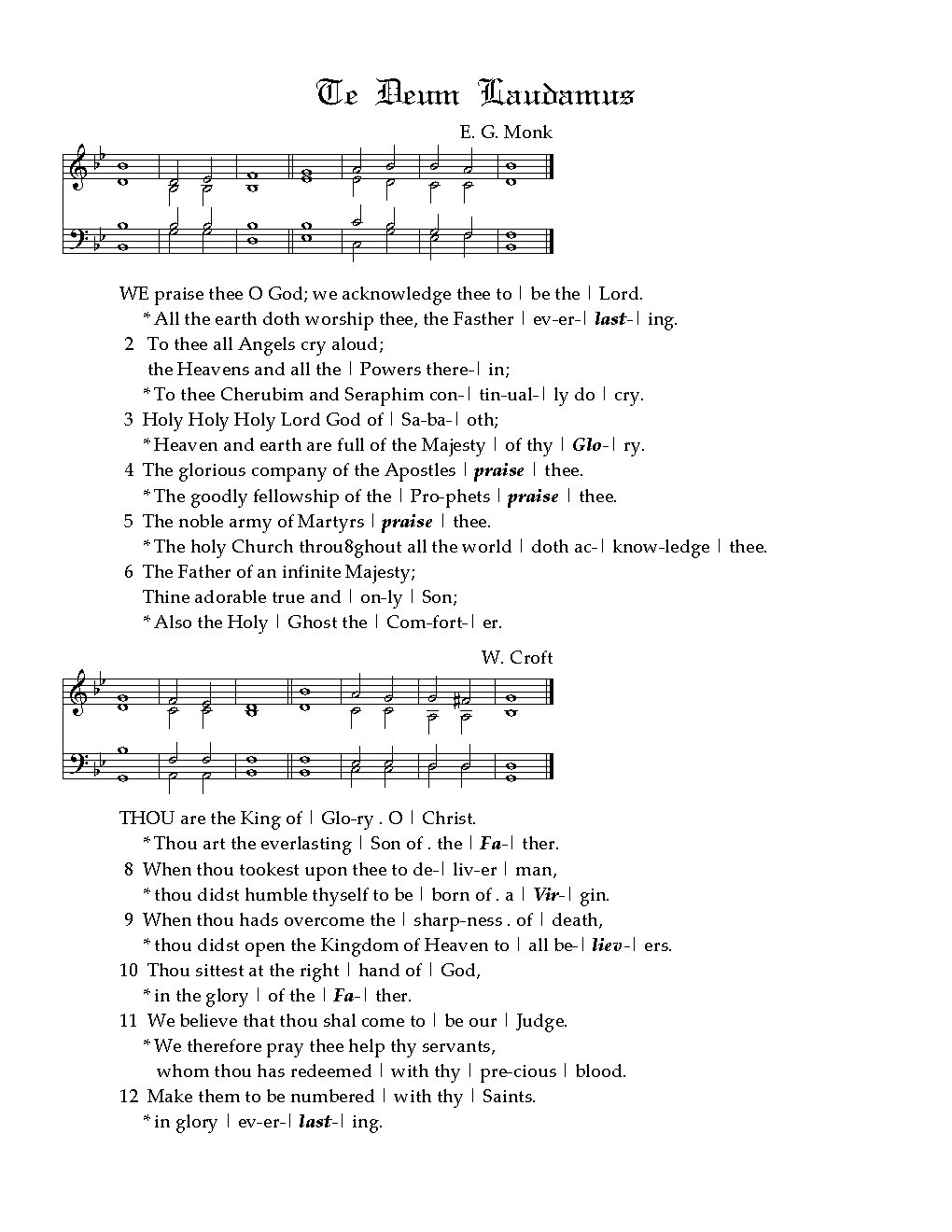
Te Deum Laudamus
Staff Notation • Anglican chants, Chants, Morning Canticles, Hymns, Celebrations
Subscribed as
Want Sunday picks sent to another address too?
Your choir should not be left out in what's trending
Sunday mass selections, psalms, and trending songs in your area — straight to your inbox.
Te Deum Laudamus by Edwin G. Monk — Lyrics
About Te Deum Laudamus
When a parish has something truly monumental to celebrate—a priestly ordination, a major jubilee, or the end of a fruitful year—we turn to the "Te Deum Laudamus". This ancient hymn of praise is the Church's ultimate song of thanksgiving. The words carry us from the earthly choir loft straight into the courts of heaven, joining the angels, the apostles, and the martyrs in declaring the majesty of God. It is a text that demands reverence, and singing it feels like participating in a conversation that has been echoing through the centuries.
This particular setting uses the traditional Anglican chant format, bringing together melodies by E. G. Monk and W. Croft. Chanting the "Te Deum" is a unique experience for a choir. Instead of a strict, driving beat, the music relies on the natural rhythm and flow of the English language. The singers must listen closely to one another, moving together through the reciting notes and cadences as one unified voice. It takes practice to get the pacing just right, but when it clicks, the result is incredibly prayerful.
As the chant shifts melodies—moving from the grand opening praises of the Father into the humble acknowledgment of Christ's incarnation and saving work—the mood of the piece deepens. By the time we reach the final petitions, asking the Lord to "save thy people and bless thine heritage," the grand praise has softened into a profound, personal trust. It is a beautiful way to lead the congregation in giving thanks, wrapping profound theology in a dignified, unhurried melody.