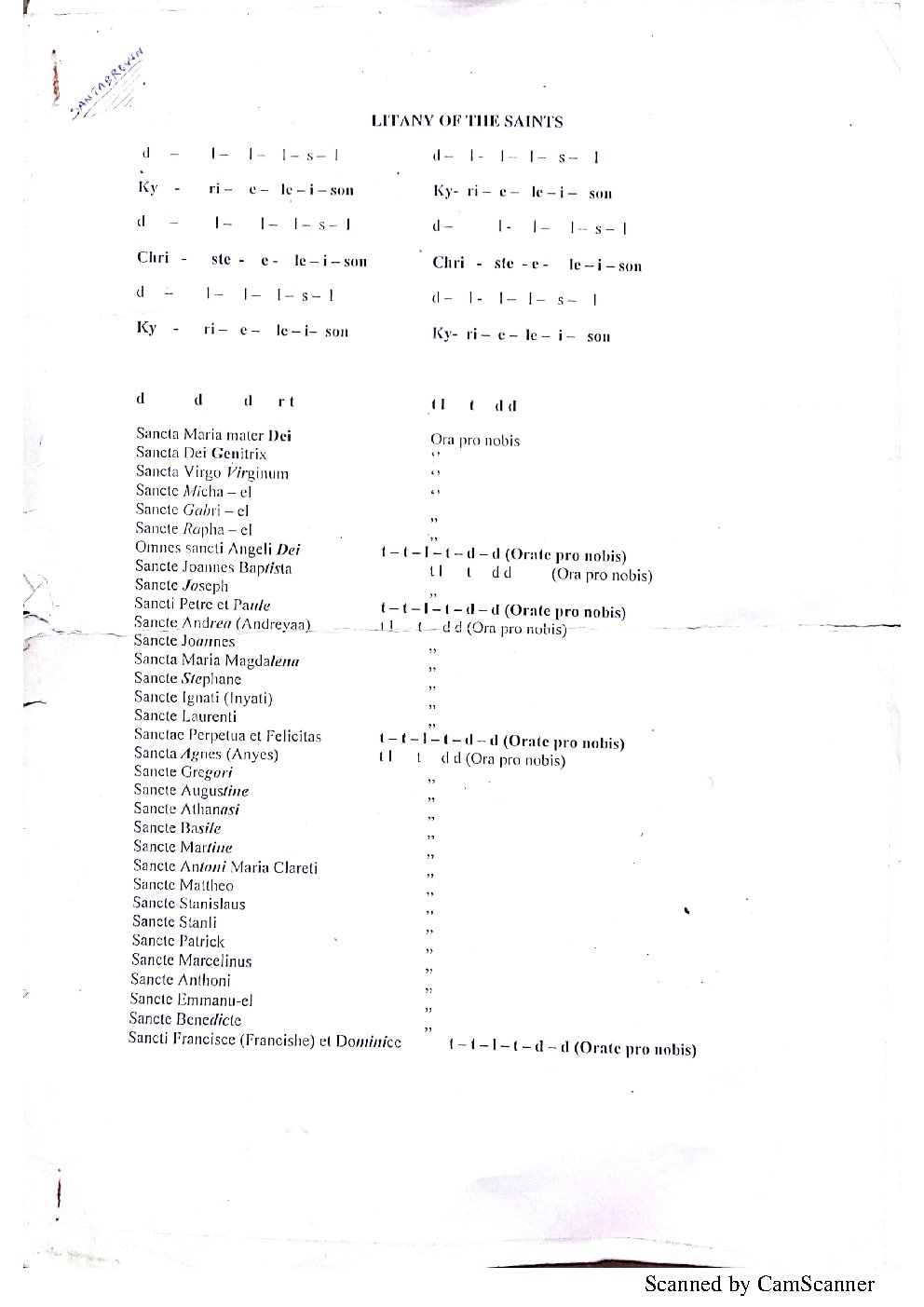
Litany of the Saints
Solfa Notation • Litanies, Latin Hymns, Ordination Hymns, Hymns for Saints & Feast Days
Subscribed as
Want Sunday picks sent to another address too?
Your choir should not be left out in what's trending
Sunday mass selections, psalms, and trending songs in your area — straight to your inbox.
Litany of the Saints by Anyanwu Sixtus — Lyrics
About Litany of the Saints
The "Litany of the Saints" (Litaniae Sanctorum) is one of the oldest and most solemn prayers of the Catholic Church. This specific arrangement by Anyanwu Sixtus was crafted for the 2013 CMF Priestly and Diaconate Ordinations, carrying the weight and majesty of that sacred rite.
In the Nigerian Catholic tradition, the Litany is sung during the most profound moments of transition—ordinations, religious professions, and the Easter Vigil. As the candidates lie prostrate on the altar, the choir leads the congregation in calling upon the host of heaven. The repetitive, chant-like structure builds a powerful sense of communion between the earthly church and the saints above, asking for their intercession over those about to be ordained.
The solfa notation provided here offers a straightforward, accessible melody for the cantor and choir. By pairing the traditional Latin invocations with a steady, rhythmic response, the arrangement allows the faithful to easily join in this sweeping prayer. The inclusion of specific petitions for the elect ("Ut hunc electum benedicere digneris") grounds the piece perfectly in its liturgical purpose.