LitaniÆ Sanctorum
Staff Notation • Latin Hymns, Ordination Hymns, Hymns for Saints & Feast Days, Prayer, Consecration, Litanies
Subscribed as
Want Sunday picks sent to another address too?
Your choir should not be left out in what's trending
Sunday mass selections, psalms, and trending songs in your area — straight to your inbox.
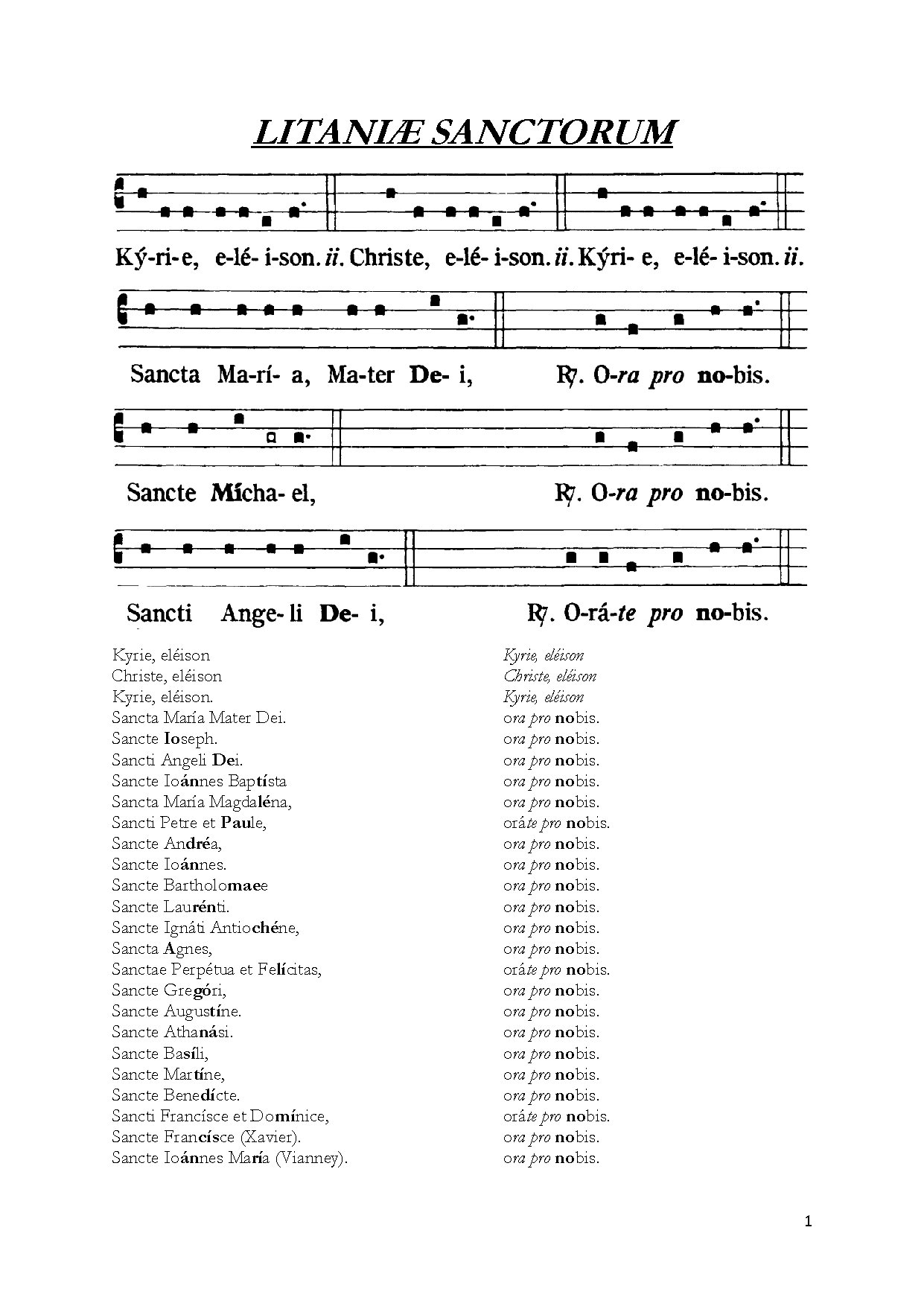
LitaniÆ Sanctorum — Lyrics
About LitaniÆ Sanctorum
When a choir begins the "Litaniæ Sanctorum" (Litany of the Saints), the atmosphere in the church shifts. This ancient chant is the sound of the Church's most solemn moments—ordinations, religious professions, and the Easter Vigil. As the cantor intones the names of the apostles, martyrs, and saints, the congregation responds with a unified "ora pro nobis" (pray for us), asking the entire court of heaven to intercede for those dedicating their lives to God.
What makes this specific setting so special is the careful selection of saints woven into the traditional Latin text. Alongside the early martyrs and apostles, we hear the invocation of Blessed Cyprian Michael Iwene Tansi, bringing the prayer close to home for Nigerian Catholics. The litany also calls upon a rich gathering of Carmelite figures, including St. Teresa of the Andes and St. Raphael Kalinowski, pointing to its use in a Carmelite ordination or final vows.
Singing this litany is less about complex harmony and more about stamina, breath, and deep prayer. The steady, rhythmic chanting of "líbera nos, Dómine" (deliver us, O Lord) and "te rogámus, audi nos" (we ask you, hear us) builds a profound sense of communion. For the choir loft and the people in the pews, it is a reminder that the liturgy on earth is always joined to the worship in heaven.