I was glad when they said unto me
Staff Notation • Ordination Hymns, Classicals, Entrance songs, Celebrations, Anthems
Subscribed as
Want Sunday picks sent to another address too?
Your choir should not be left out in what's trending
Sunday mass selections, psalms, and trending songs in your area — straight to your inbox.
I was glad when they said unto me by Charles Hubert Hastings Parry — Lyrics
About I was glad when they said unto me
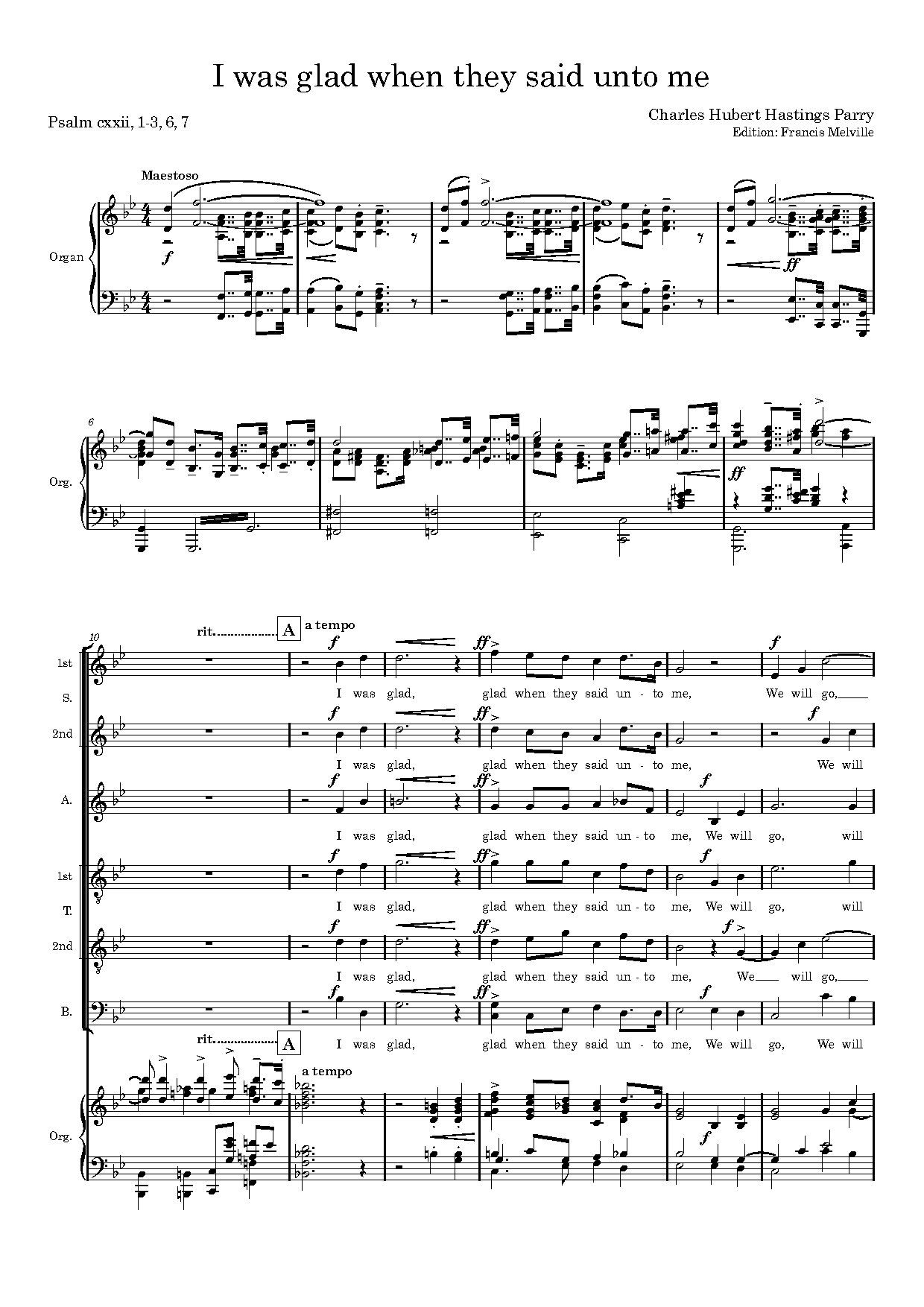
When a choir director hands out the score for "I was glad when they said unto me," a ripple of excitement usually goes through the loft. Setting the words of Psalm 122, Charles Hubert Hastings Parry created what is arguably the most thrilling processional anthem in the choral tradition. From the very first majestic organ chords, the piece captures the sheer joy and anticipation of walking into the house of the Lord.
Singing this anthem is a major undertaking that asks for everything a choir has to give. The sweeping opening sections require a massive, unified sound, which suddenly gives way to the famous "Vivat" acclamations. Originally written to be shouted by the King's Scholars of Westminster School during royal coronations, this specific edition updates the Latin cheers for King Charles and Queen Camilla. After that burst of royal fanfare, the mood shifts entirely. The semi-chorus introduces a hushed, reverent prayer for the peace of Jerusalem, demanding incredible breath control and tenderness from the singers.
In our cathedral and high-church parishes, this is the kind of music reserved for the grandest occasions—the entrance of a bishop, a major anniversary, or an ordination Mass. It takes weeks of intense rehearsal to get the dynamic contrasts right, but when the final chords of "plenteousness within thy palaces" ring out, the effort vanishes. It simply lifts the entire congregation, offering a glorious glimpse of heavenly worship.