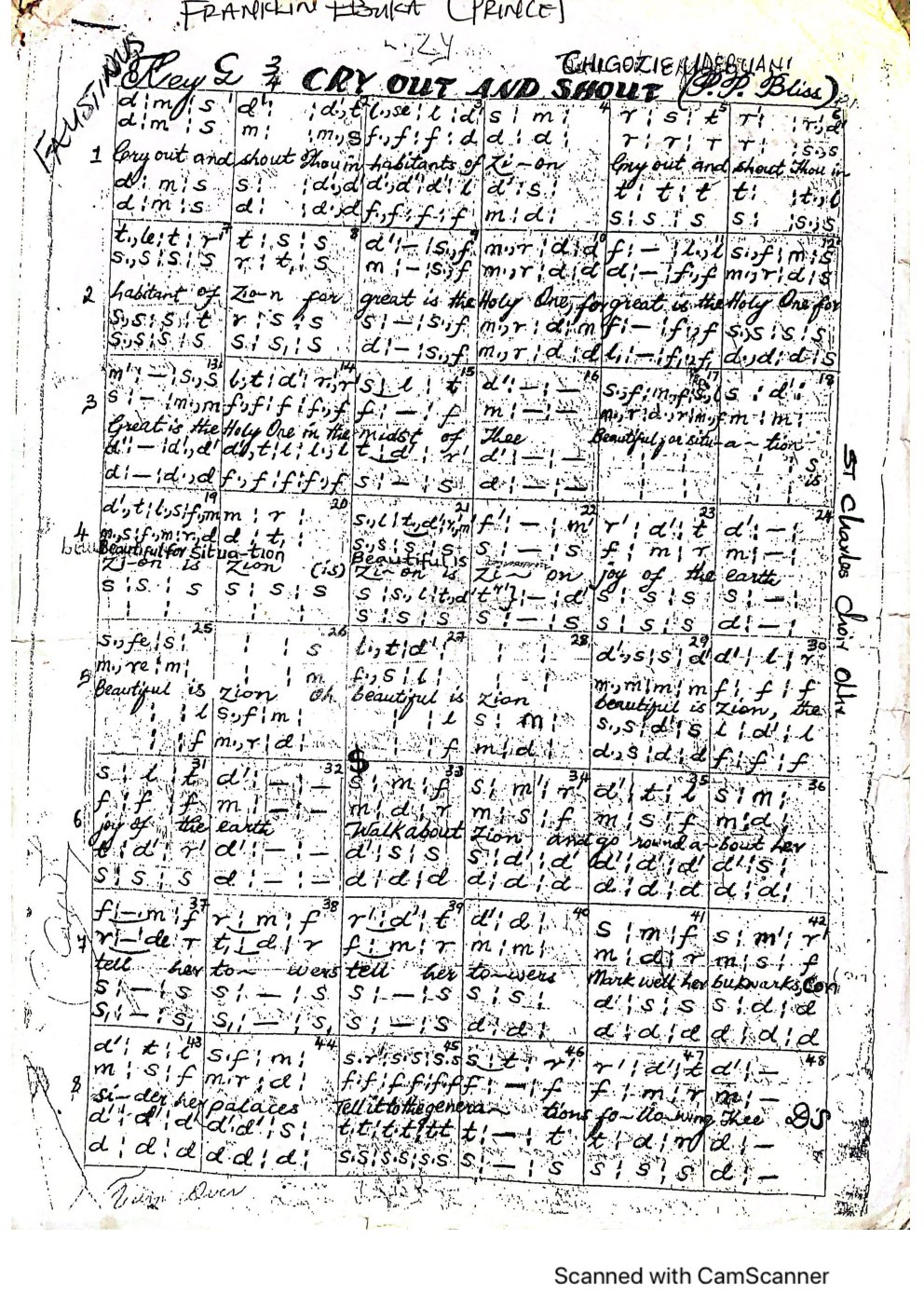
CRY OUT AND SHOUT
Solfa Notation • Anthems, Hymns, Latin Hymns, Prayer
Subscribed as
Want Sunday picks sent to another address too?
Your choir should not be left out in what's trending
Sunday mass selections, psalms, and trending songs in your area — straight to your inbox.
CRY OUT AND SHOUT by Philip P. Bliss — Lyrics
About CRY OUT AND SHOUT
When we pull out this score for rehearsal, we are actually looking at two distinct pieces of worship music that serve very different moments in the liturgy. The first, "Cry Out and Shout," is a vibrant, majestic anthem drawing its text from the books of Isaiah and Psalms. It calls on the "inhabitant of Zion" to rejoice because the Holy One is in their midst. For a choir, this piece is an absolute joy to sing during festive occasions or as a grand recessional. The rolling lines describing the towers, bulwarks, and palaces of Zion give the voices a chance to build a real sense of architectural majesty in sound, urging the congregation to pass the faith down to the generations following.
On the second page, the mood shifts entirely with a setting of the "Pater Noster" (Our Father). Sung in Latin, this prayer brings a deep, reverent hush to the church. Where the first piece is all about outward proclamation and joyful noise, the Pater Noster draws us inward. It is perfect for the Communion rite or moments of solemn adoration, allowing the choir to lead the faithful in the very words Christ taught. Having both of these on one sheet gives us a beautiful contrast between the exuberant praise of the Old Testament and the quiet, grounding devotion of the New.