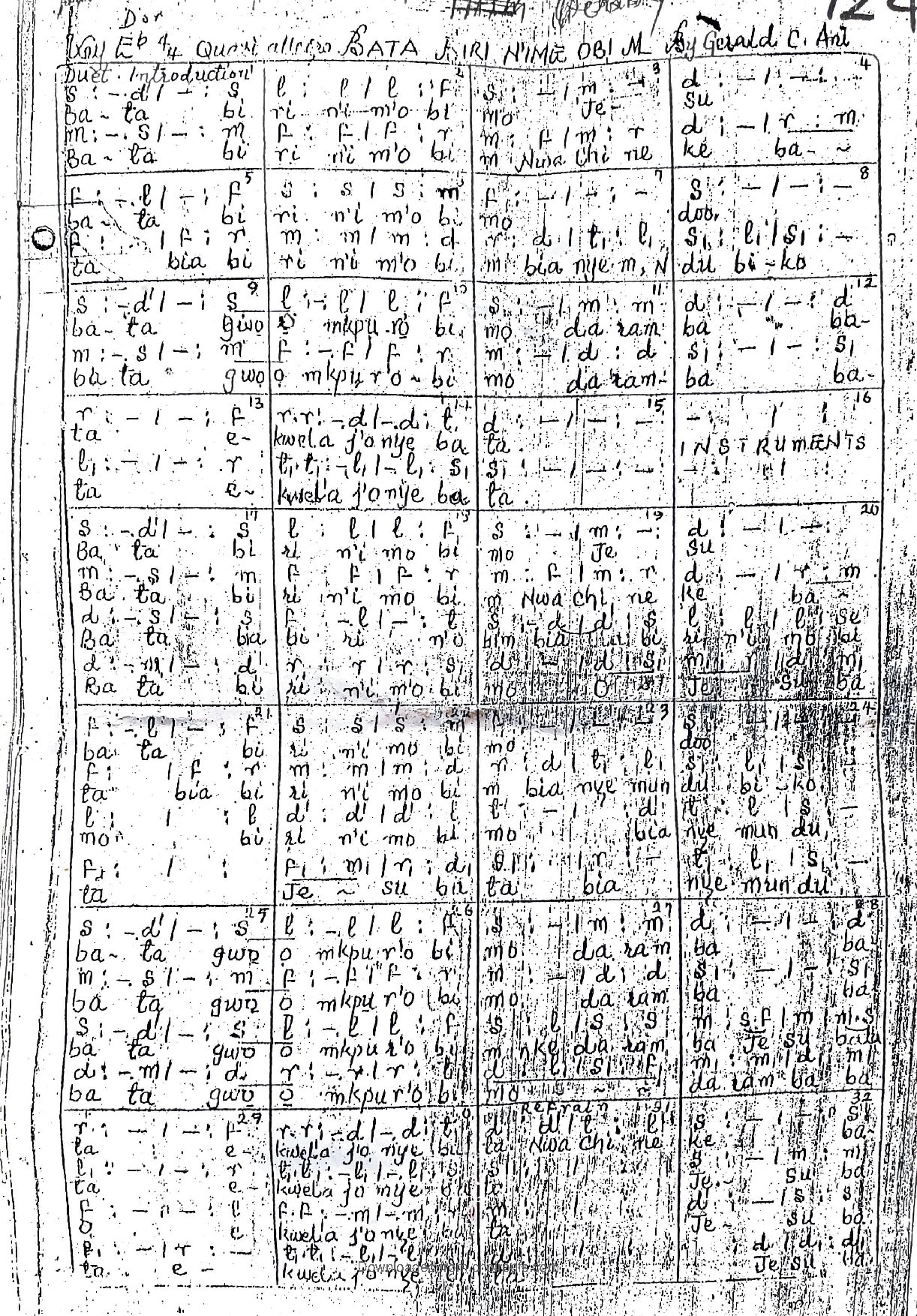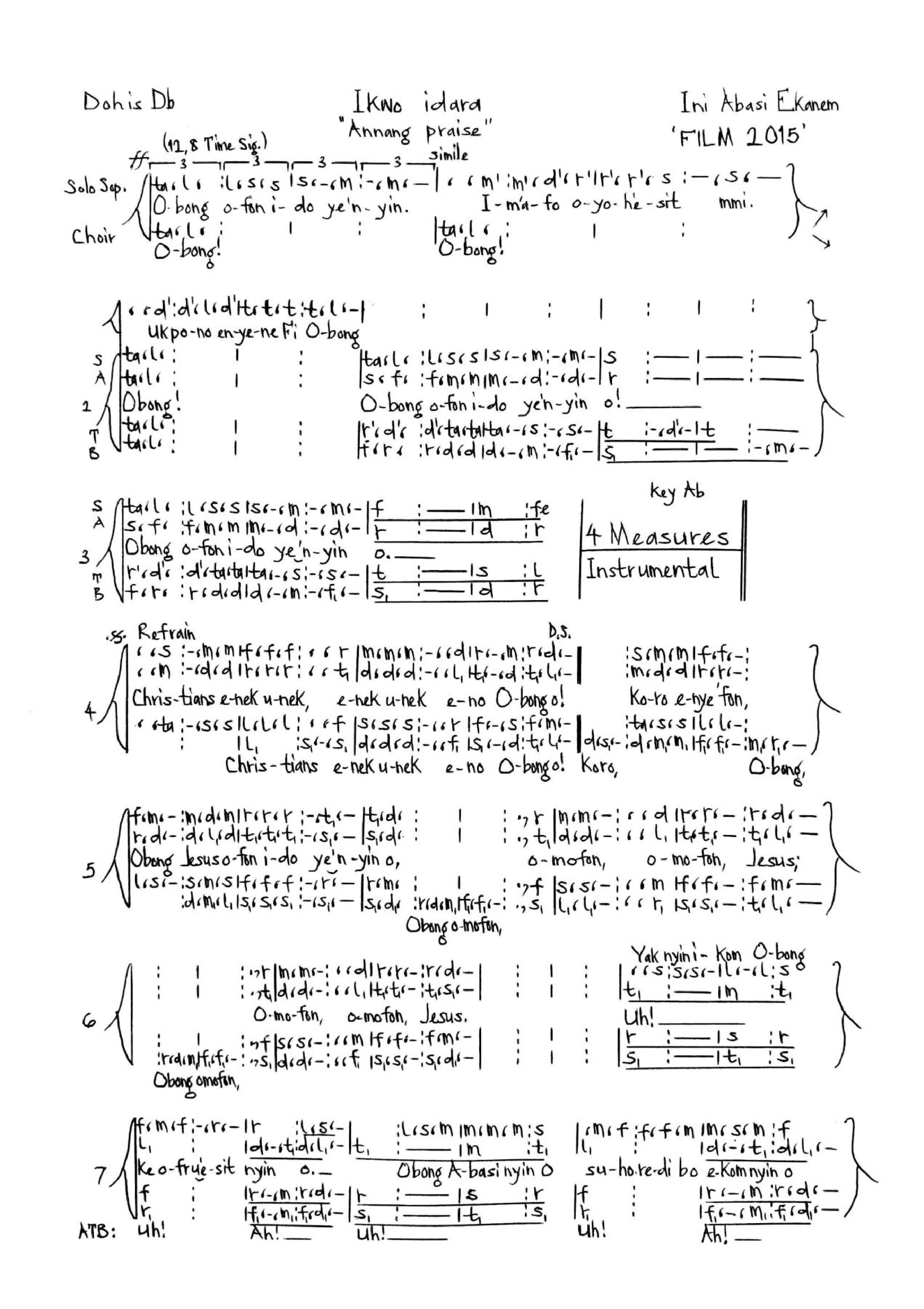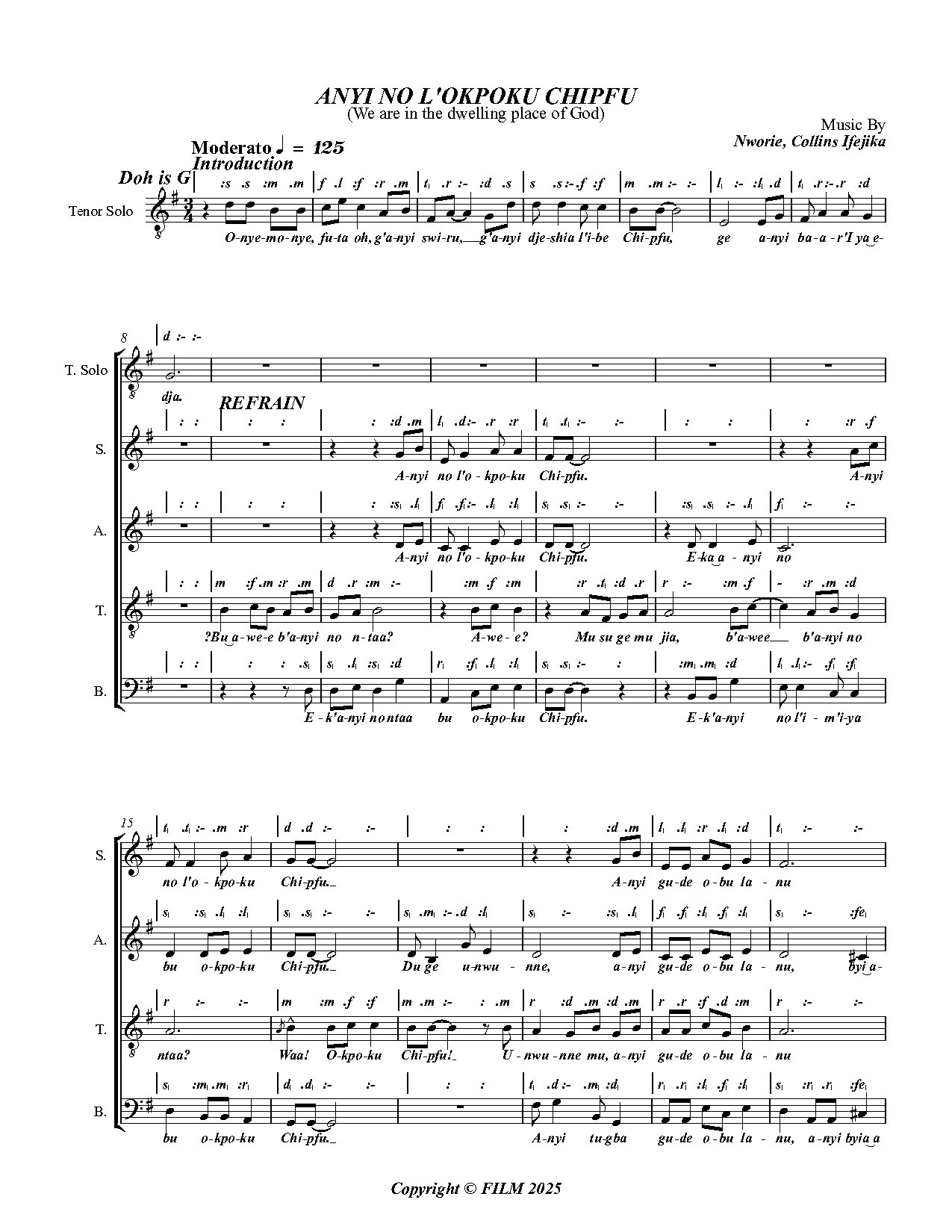
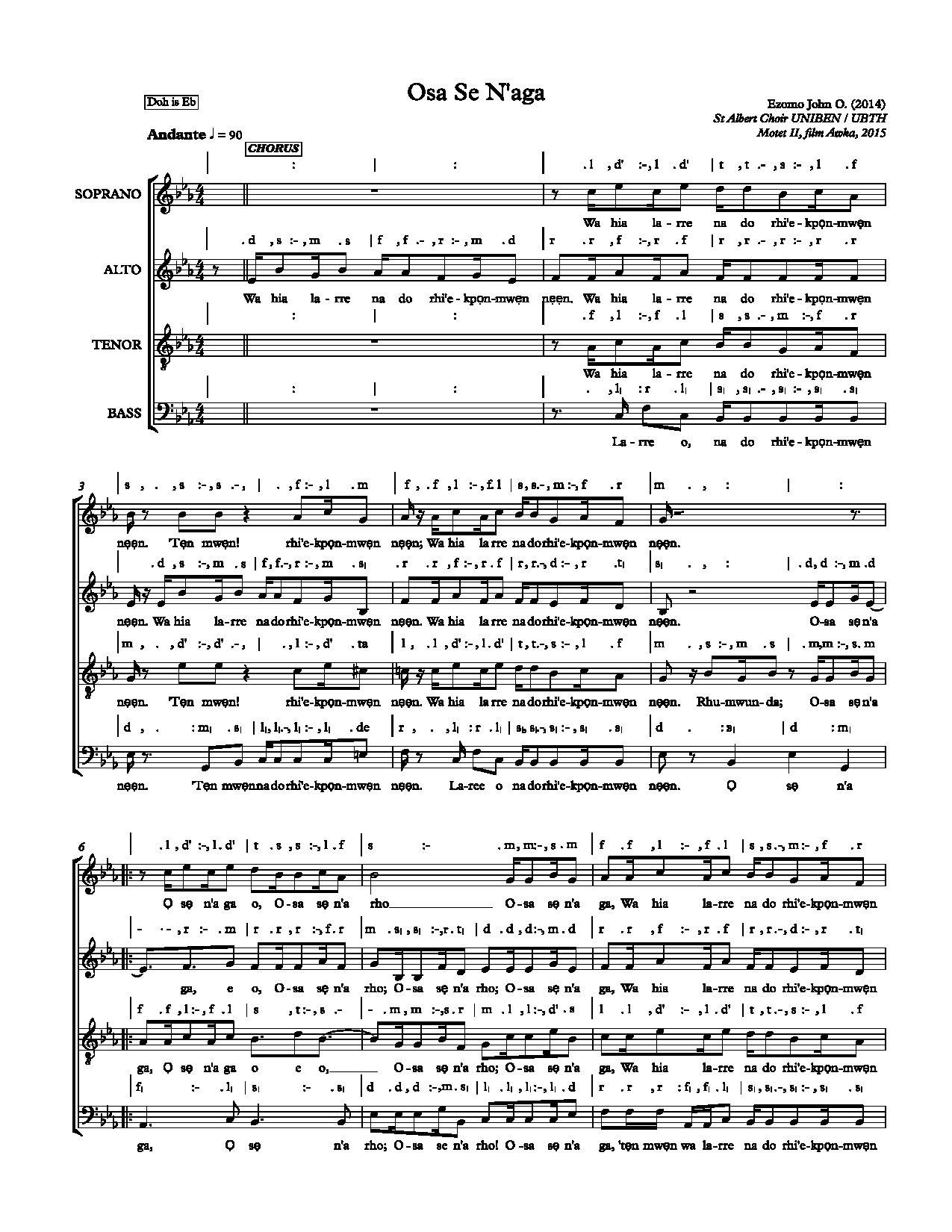
ANYI NO L'OKPOKU CHIPFU - Choir Script PDF Thumbnail
Preview
0 0
2 downloads
Added Sep 28, 2025
Uploaded By: Choir PDFs
Format: Staff & Solfa
Language: Igbo
Pages: 7 pages
ANYI NO L'OKPOKU CHIPFU by Nworie Collins Ifejika — Lyrics

INTRODUCTION Onyemonye, futa oh, g'anyi swiru, g'anyi djeshia l'ibe Chipfu, ge anyi ba a r'I ya edja. REFRAIN Anyi no l'okpoku Chipfu. Anyi no l'okpoku Chipfu. Anyi gude obulanu bu okpoku Chipfu. su g'anyi djee l'ib'Iya ke l'O bu Nnaji anyi. VERSE 1 Eev'iya. Unu nyataru iphem'iphe bu onu oma Ogoru nu anyi? Eeh oh! Ngwa g'anyi futa, g'anyi djee l'ib'I ya, n'I ya adjadja, tua Ya epha ke l'o bu Ya bu Chipfu anyi. VERSE 2 Unu maru l'iphe anyi bu ntanu a b'I ya mer'Iy'anyi? Eev'iya.
Read full lyrics

About ANYI NO L'OKPOKU CHIPFU

When the choir strikes up "Anyi No L'Okpoku Chipfu," the atmosphere in the church immediately shifts to one of joyful reverence. The title translates to "We are in the dwelling place of God," and the music perfectly captures the excitement of stepping into the sanctuary. Written in the distinct and beautiful Igbo dialect of the Abakaliki region—where God is called *Chipfu*—the song serves as a vibrant call to worship. It reminds the congregation that they have entered a sacred space, leaving the worries of the world outside to gather in the house of their Father.

The arrangement opens with a welcoming tenor solo that beckons everyone to come forward, setting a warm, inviting tone before the full choir joins in the refrain. As the verses unfold, the sopranos lead the call to remember God's goodness, asking the people to reflect on the wonderful things He has done. The piece builds into a rich, layered choral texture, especially during the gradual bass entry in the third verse, which creates a sense of a growing, unified procession moving toward the altar.

Choirmasters often choose this piece for the Entrance procession, especially on festive Sundays. The final tenor solo section acts as a heartfelt testimony, encouraging everyone to bring their praises forward. Singing this song feels like a communal celebration of faith, grounding the Mass in a deep sense of local identity and shared gratitude.