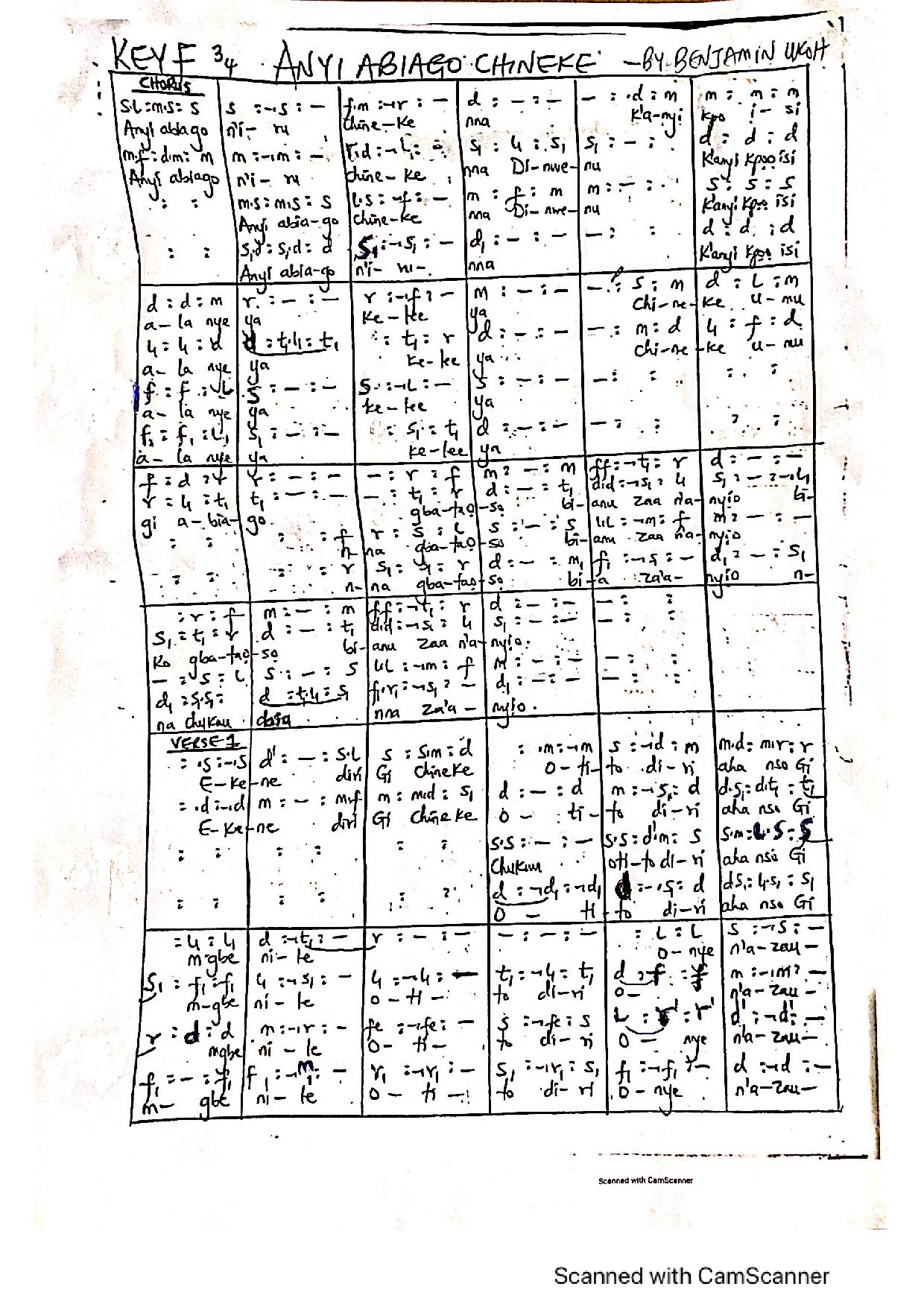
Anyi Abiago Chineke
Solfa Notation • Entrance songs, Penitential Rite / Kyrie, Hymns
Subscribed as
Want Sunday picks sent to another address too?
Your choir should not be left out in what's trending
Sunday mass selections, psalms, and trending songs in your area — straight to your inbox.
Anyi Abiago Chineke by Ukoh Benjamin — Lyrics
About Anyi Abiago Chineke
"Anyi Abiago Chineke" is a deeply reverent Igbo hymn that beautifully bridges the gathering of the congregation with the plea for God's mercy. Composed by Benjamin Ukoh, the song opens with a humble declaration of our presence before the Father—"Anyị abịago n'iru Chineke Nna" (We have come before God the Father). It is an ideal piece for the Entrance procession, drawing the minds of the faithful into a posture of worship as they bow down and give thanks. The melody is steady and earnest, carrying the weight of a people who recognize their dependence on their Creator.
As the piece unfolds, it transitions naturally into the Penitential Rite. The second verse shifts the focus to a sincere cry for forgiveness, asking the Lord to wash away our sins and have mercy ("Gbaghara anyị njọ anyị nile"). This dual purpose makes it a wonderful choice for the early moments of the Mass, leading the choir and congregation from the physical act of gathering straight into the spiritual preparation of the Kyrie. The repeated plea for the Father to run and answer our prayers ("Nna gbata ọsọ bịanụ zaa n'anyị o") adds a touching, urgent vulnerability to the music.
By the third verse, the choir lifts up the sacrifice of the Mass itself ("aja missa"), reminding everyone why they have gathered. Singing this piece from the choir loft requires a balance of joyful arrival and solemn reflection. It is a staple for many Nigerian Catholic choirs because it captures the complete journey of the introductory rites—gathering, repenting, and preparing the altar—all within one cohesive, moving arrangement.